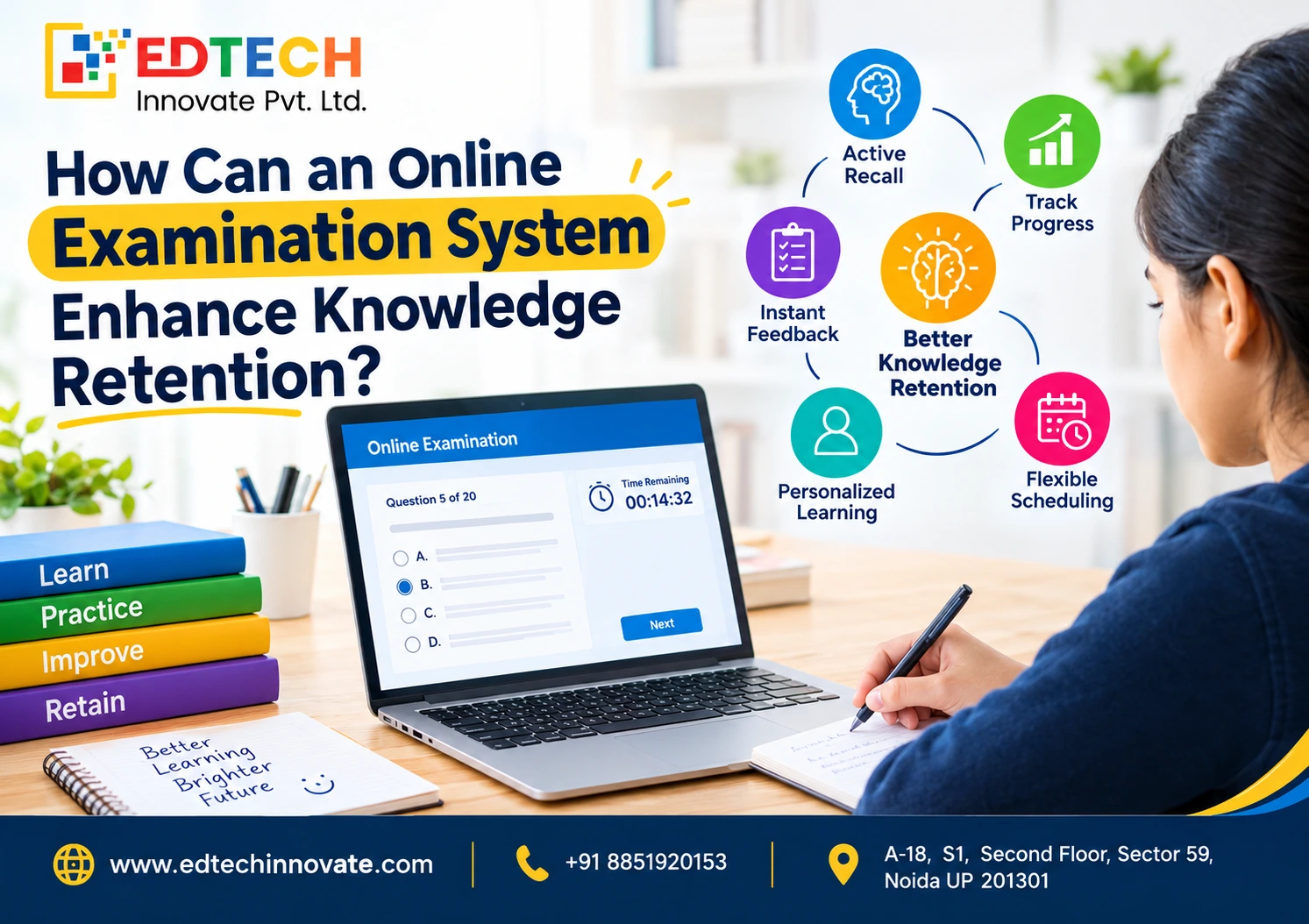
An online examinatio...

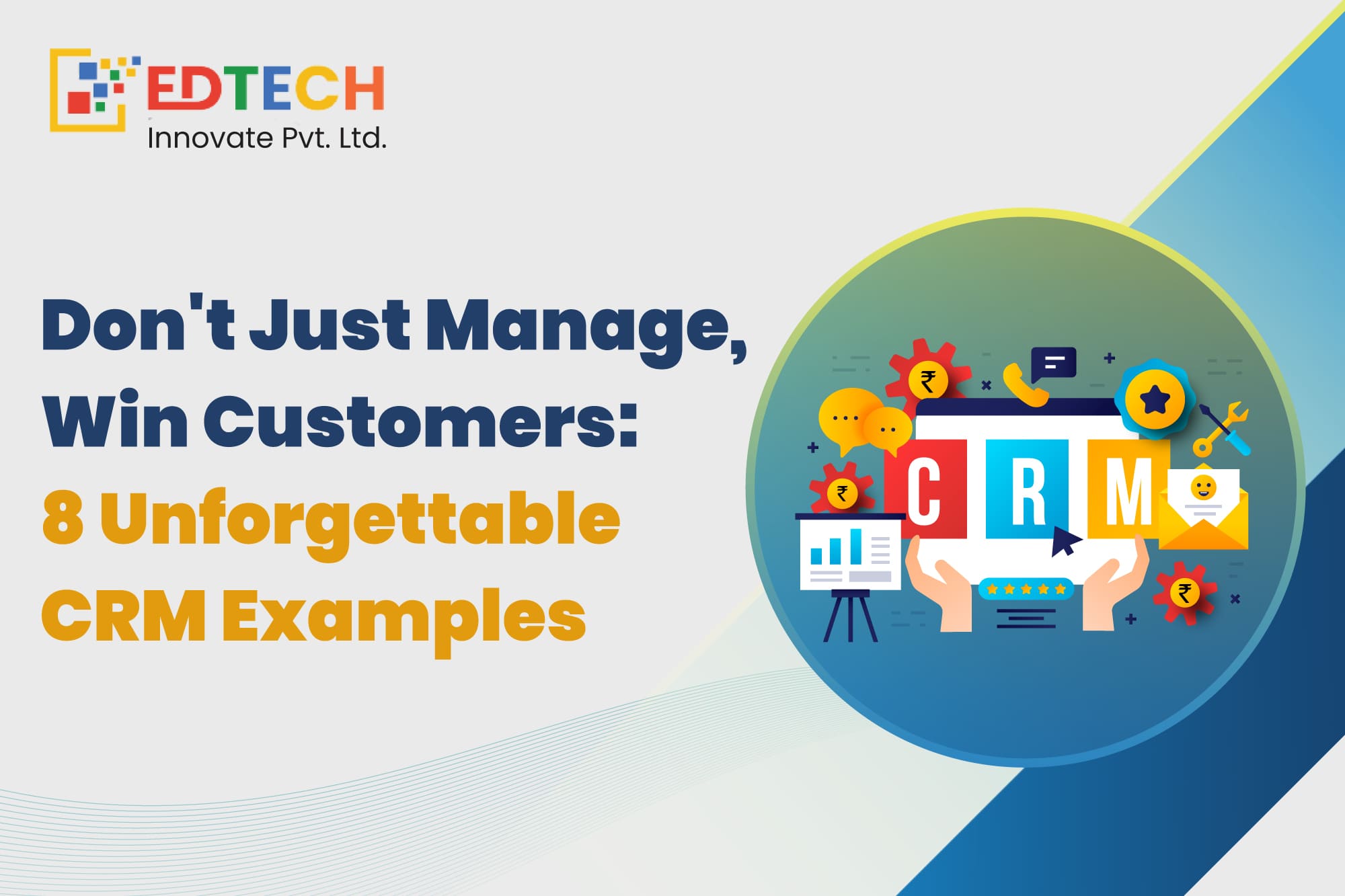
As education businesses scale, a growing number of student inquiries, admissions applications, and follow-up conversations can quickly become impossible to track in spreadsheets or inboxes. This is where an EdTech CRM becomes essential. An EdTech CRM is software built specifically to help schools, colleges, coaching institutes, and online course providers manage student leads, applications, admissions, and ongoing communication from a single, centralized system.
As student inquiries pour in from websites, social media, paid ads, referrals, and offline events, education teams often struggle to follow up on time, track application status, or understand which marketing channels are actually driving enrollments. A CRM solves this by centralizing every prospect and student record, automating repetitive follow-ups, and giving admissions and marketing teams a clear view of where each lead stands in the enrollment journey.
The shift toward online education and digital-first admissions has only made this more urgent. As more learners discover institutions online, education businesses need technology that can keep pace with digital lead volume while still delivering a personal, human touch. This guide walks through what an EdTech CRM is, why education businesses need one, the benefits and features that matter most, how top CRM platforms compare, and a practical framework for choosing the right CRM for your institution.
CRM, or customer relationship management software, is a system businesses use to organize contact information, track interactions, and manage relationships with prospects and customers over time. In education, those "customers" are prospective students, parents, and enrolled learners.
An EdTech CRM is customer relationship management software designed for education businesses to manage student leads, inquiries, admissions, communication, enrollment, and ongoing student relationships from one centralized platform.
Unlike a general-purpose sales CRM, an EdTech CRM is shaped around the specific workflow of education: capturing inquiries, qualifying prospective students, moving them through counseling and application stages, tracking document submissions, and staying in touch long after enrollment for renewals, upsells, or referrals. A traditional CRM assumes a straightforward sales pipeline; an EdTech CRM is built to reflect an admissions funnel, complete with academic terms, course interests, and parent or guardian contacts.
It's also worth distinguishing CRM from spreadsheets. Spreadsheets can hold contact details, but they don't send automated reminders, don't show a real-time pipeline view, and quickly become error-prone as multiple team members update the same file. A CRM automates what a spreadsheet can only record. A common misconception is that CRM is "just for sales teams" — in reality, admissions counselors, marketing teams, and even academic staff all rely on the same centralized data.
An EdTech CRM is useful across a wide range of education businesses, including EdTech companies, schools, colleges, universities, coaching institutes, online course providers, and training institutes.
Most education businesses reach a tipping point where manual processes can no longer keep up. Common challenges include:
An Education CRM addresses these problems by centralizing every inquiry and interaction into one system, giving teams a structured, repeatable process for managing prospective students from first contact through enrollment.
A CRM keeps a complete history of every interaction — calls, emails, form submissions, counseling notes — in one centralized student record. This makes it possible to personalize communication, follow up at the right time, and give parents and students better, more informed support, because any team member can see the full context of a relationship instantly.
CRM software gives teams a visual admissions pipeline, so every inquiry can be tracked, qualified, and moved through counseling, application, and enrollment stages. Automated follow-up reminders and application tracking mean fewer prospects fall through the cracks as they move through the enrollment journey.
CRM automation — automated reminders, task assignment, lead routing, and workflow triggers — reduces the manual data entry and repetitive admin work that eats into an admissions team's day. That frees counselors and sales staff to spend more time actually talking to students and less time updating records by hand.
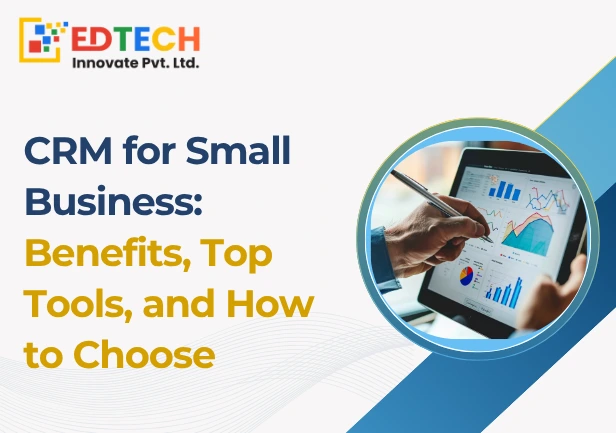
CRM dashboards, reports, and analytics turn scattered activity into usable insight — enrollment trends, lead conversion rates, counselor performance, and marketing ROI all become visible in one place. With centralized data, managers can spot bottlenecks and make decisions based on evidence rather than guesswork, and build more accurate sales forecasts.
A CRM's usefulness doesn't end at enrollment. Personalized follow-ups, feedback collection, re-engagement campaigns, renewal reminders, and course recommendations all help education businesses maintain student engagement and improve retention well beyond the initial sale.
Each of these features matters because education businesses juggle high lead volume, multiple communication channels, and long, multi-step admissions journeys — a CRM without these capabilities quickly becomes just another disconnected spreadsheet.
| CRM | Best For | Free Plan | Starting Price | Key Features |
|---|---|---|---|---|
| HubSpot CRM | EdTech startups and growing businesses | Yes/availability varies | Verify current pricing | Lead management, automation, marketing, reporting |
| Zoho CRM | Small and mid-sized education businesses | Yes/availability varies | Verify current pricing | Automation, workflows, analytics, integrations |
| Salesforce | Large education organizations | Trial/options vary | Verify current pricing | Customization, automation, analytics |
| Freshsales | Admissions and sales teams | Plan dependent | Verify current pricing | Lead management, email, automation |
| Pipedrive | Education sales teams | Trial | Verify current pricing | Pipeline management, activities, reporting |
| Monday CRM | Teams needing visual workflows | Trial/plan dependent | Verify current pricing | Pipeline management, automation, dashboards |
Always verify current pricing and free-plan details on each provider's official website before making a decision, as plans change frequently.
HubSpot CRM offers a beginner-friendly interface with strong lead management, marketing tools, automation, and reporting, making it a solid fit for EdTech startups and growing education businesses. Its limitation is that advanced features can become expensive as a team scales, and some capabilities sit behind paid tiers.
Zoho CRM stands out for flexible customization, automation, and integrations at a cost-conscious price point, which suits small and mid-sized education businesses well. The trade-off is that some configuration and setup is required, and advanced features carry a learning curve.
Salesforce is built for larger educational organizations with complex operations, offering deep customization, advanced automation, and powerful analytics backed by a large integration ecosystem. It's also the most complex option, and implementation often requires technical resources, which can make advanced deployments costly.
CRM pricing depends on several factors: number of users, number of contacts, features, automation depth, storage, integrations, customization, reporting, customer support level, and implementation requirements.
| Pricing Factor | What to Consider |
|---|---|
| Number of Users | Admissions, sales, marketing, and management users |
| Contacts | Number of student and prospect records |
| Automation | Follow-ups, workflows, lead assignment |
| Integrations | LMS, email, website, communication tools |
| Reporting | Basic or advanced analytics |
| Customization | Fields, workflows, pipelines |
| Support | Email, chat, phone, dedicated support |
| Implementation | Data migration, setup, training |
Because CRM pricing changes frequently and varies by plan tier, avoid relying on fixed numbers from older articles — always verify current pricing directly on the provider's website before making a purchasing decision.
A smooth rollout depends on preparation as much as the software itself. Import student data properly, clean duplicate records, and organize existing information before go-live. From there, build admission workflows, train employees thoroughly, customize pipelines to match your actual process, set measurable goals, integrate your existing tools, configure automation, and keep monitoring performance so student data stays clean and up to date.
Suggested Implementation Roadmap
Schools use CRM to manage inquiries, admissions, parent communication, and ongoing student relationships. Colleges and universities rely on it to manage prospective students, applications, admissions, and enrollment communication at scale. Coaching institutes track student inquiries, counseling sessions, follow-ups, and course enrollment. Online education companies manage digital leads, course inquiries, trial users, purchases, and engagement across a fully digital funnel. EdTech startups use CRM to handle large volumes of online leads while automating sales and marketing processes. Training institutes manage inquiries, registrations, course scheduling, and follow-ups, while study abroad consultants track long, multi-step counseling and application journeys. Corporate training providers use CRM to manage corporate leads, training opportunities, client relationships, and contract renewals.
A CRM maps directly onto the student enrollment funnel: Lead Generation → Lead Capture → Lead Qualification → Counseling → Follow-Up → Application → Enrollment.
At each stage, the CRM helps teams capture leads automatically from web forms and ad platforms, assign them to the right counselor, and track every interaction that follows. Automated follow-ups keep prospects warm, while lead scoring helps identify high-intent students worth prioritizing. As applicants move forward, the CRM tracks application progress and flags where prospects are dropping off — surfacing bottlenecks that would otherwise go unnoticed and giving teams the data to improve conversion rates over time.
For example, when a prospective student fills out an inquiry form on an EdTech company's website, the CRM can instantly log the lead, notify a counselor, and trigger a welcome email. As the counselor follows up by phone or WhatsApp, every conversation is logged against that student's record. Automated reminders keep the follow-up cadence consistent until the student submits an application, after which the CRM tracks document submission and payment status through to confirmed enrollment — with zero manual spreadsheet updates along the way.
AI-powered CRM is beginning to analyze student interactions and recommend the best next action for counselors. Predictive analytics can flag which leads are statistically more likely to enroll, helping teams prioritize their time. AI chatbots are increasingly used to answer common student questions and capture leads around the clock. CRM automation continues to expand into more of the repetitive follow-up and workflow work that once required manual effort. Voice CRM tools are emerging to let counselors and sales teams log information hands-free. Mobile CRM access lets education teams manage student data from anywhere, while customer journey analytics tracks how students move across channels before converting. Together, these trends point toward more personalized student experiences, powered by CRM data that shapes communication and course recommendations to each individual.
Investing in a CRM pays off through higher lead conversion, better student satisfaction, faster admissions, and improved overall efficiency. It supports better student communication, stronger retention, and more data-driven decision-making, while also improving marketing ROI and reducing manual work across teams. Perhaps most importantly, a good CRM gives education businesses long-term scalability and a real competitive advantage as student acquisition grows more digital and more competitive.
CRM shouldn't be viewed only as sales software — for EdTech businesses, it becomes the centralized platform for managing leads, admissions, student communication, enrollment, and long-term relationships, all in one place.
| Feature | EdTech CRM | Traditional Student Management Software |
|---|---|---|
| Lead Management | Yes | Often limited |
| Sales Pipeline | Yes | Usually limited |
| Admission Tracking | Yes | Yes |
| Marketing Automation | Yes | Limited |
| Follow-Up Automation | Yes | Limited |
| Student Communication | Yes | Yes |
| Reporting | Advanced | Varies |
| Sales Analytics | Yes | Limited |
| Lead Nurturing | Yes | Usually limited |
| Integrations | Extensive | Varies |
In practice, an EdTech CRM and a traditional student management system don't always have to replace one another — many institutions run both together, using the CRM for lead and admissions management and the student management system for academic records once a student is enrolled.
What is an EdTech CRM?
An EdTech CRM is software that helps education businesses manage student leads, inquiries, admissions, communication, enrollment, and ongoing relationships from one centralized system. It replaces scattered spreadsheets and inboxes with a single source of truth for every prospective and current student.
What is the best CRM for EdTech companies?
The best CRM depends on your business size, budget, workflow, automation needs, integrations, and scalability requirements. Platforms like HubSpot, Zoho, and Salesforce are all worth evaluating, but no single CRM is universally "best" for every institution.
Is there a free CRM for education businesses?
Some CRM platforms offer free plans or free trials, though features and limits vary widely. Before relying on a free tier, check the current limits on users, contacts, automation, and reporting.
How much does an EdTech CRM cost?
Pricing depends on the number of users, contacts, features, automation depth, integrations, customization, and support level. It's best to compare total cost of ownership rather than just the advertised monthly subscription price.
Which CRM is easiest to use for beginners?
The easiest CRMs for beginners tend to have a simple interface, quick setup, a clear dashboard, ready-made templates, strong onboarding, and responsive customer support.
What features should an EdTech CRM have?
At minimum, look for lead management, student contact management, an admission pipeline, CRM automation, communication tools, reporting, integrations, and mobile access.
Can CRM improve student enrollment?
Yes. A CRM improves enrollment by capturing leads automatically, automating follow-ups, prioritizing high-intent prospects, tracking counseling activities, and surfacing bottlenecks in the admissions process.
How long does EdTech CRM implementation take?
Implementation time depends on business size, data volume, customization needs, integrations, and team requirements. A simple setup can be live in days, while complex, highly customized deployments can take weeks or longer.
Is CRM suitable for EdTech startups?
Yes. Startups can use CRM to organize incoming leads, automate repetitive processes, track conversion rates, and build scalable sales and admissions workflows from day one.
Can an EdTech CRM integrate with an LMS?
Many CRM platforms support LMS integration through native connectors, APIs, or third-party integration tools, but compatibility varies — always verify that your specific CRM and LMS work together before purchasing.
How do I choose the right EdTech CRM?
Identify your goals → Set your budget → Compare features → Check integrations → Test free trials → Evaluate usability → Review support → Consider scalability.
An EdTech CRM has become essential infrastructure for modern education businesses, helping teams manage leads, admissions, enrollment, communication, and long-term student relationships from a single platform. The right CRM combines automation, reporting, integrations, and scalability to replace the scattered spreadsheets and missed follow-ups that hold growing institutions back. Rather than choosing a CRM based on brand popularity alone, education businesses should evaluate platforms against their own team size, budget, and admissions workflow. Take advantage of free trials, compare a few solutions side by side, and involve your admissions and marketing teams in the decision. With the right EdTech CRM in place, education businesses are better positioned to convert more leads, streamline admissions, and build stronger, longer-lasting relationships with every student.