An online examinatio...

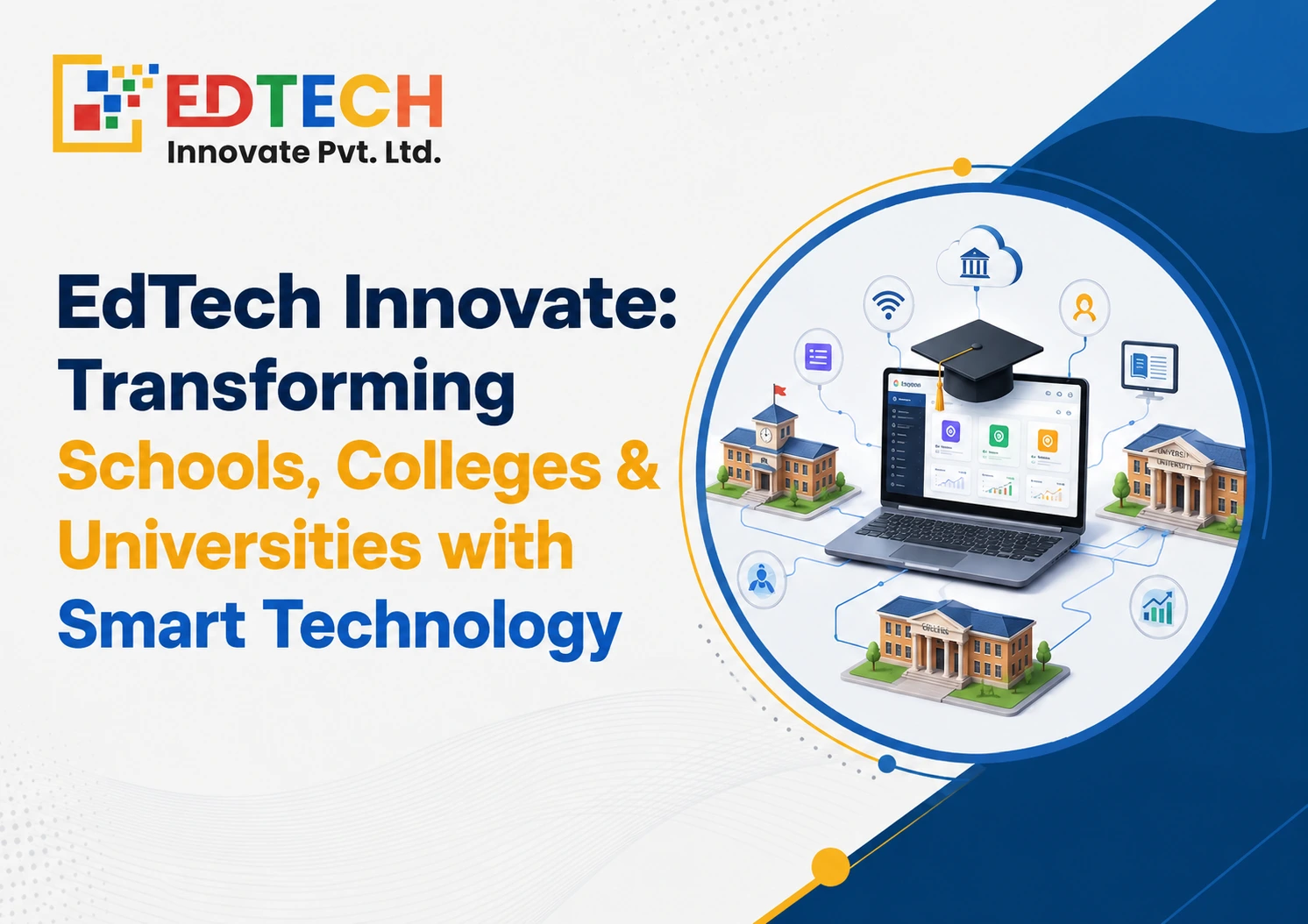
Education is undergoing one of the fastest transformations in its history, and Edtech Innovate sits right at the center of this shift. As institutions move away from chalk-and-talk classrooms toward connected, data-driven learning environments, the demand for reliable educational technology partners has never been higher. Edtech Innovate is a B2B EdTech solutions provider that helps schools, colleges, universities, and corporate training teams deliver smarter, more personalized, and more measurable learning experiences.
The traditional model of education — one-size-fits-all lectures, paper records, and manual assessments — is struggling to keep pace with today's learners. Students expect flexibility, instant feedback, and content that adapts to their pace. Institutions, meanwhile, need tools that reduce administrative overhead while improving outcomes. This is exactly the gap that Edtech Innovate is built to close.
Powered by AI-driven learning management systems, cloud infrastructure, and real-time analytics, Edtech Innovate gives educational institutions the technology backbone to run virtual classrooms, automate assessments, track student performance, and scale learning delivery without scaling costs proportionally. Whether it's a school digitizing attendance and grading, a university running hybrid degree programs, or a company training thousands of employees remotely, Edtech Innovate's suite of CRM, ERP, and LMS tools is designed to make education more accessible, efficient, and outcome-focused.
In this guide, we'll explore what Edtech Innovate is, how it works, its core features, and why it's becoming a preferred choice for institutions embracing digital transformation.
Edtech Innovate is an educational technology company that builds smart learning solutions — including Learning Management Systems (LMS), Customer Relationship Management (CRM) tools for admissions, and Enterprise Resource Planning (ERP) systems — for schools, colleges, universities, and corporate training departments.
Quick Definition: Edtech Innovate refers to a suite of AI-powered educational technology tools that help institutions manage admissions, deliver online learning, track student performance, and automate academic operations from a single connected platform.
At its core, educational innovation is about using technology to solve real problems in teaching, learning, and administration. This can mean replacing manual paperwork with automated workflows, using AI to personalize lesson delivery, or giving administrators real-time dashboards instead of static spreadsheets.
For someone new to the space, think of Edtech Innovate as the digital infrastructure layer sitting underneath a modern institution — similar to how a CRM runs a sales team or an ERP runs a factory. It connects admissions, academics, communication, and reporting into one ecosystem, so institutions aren't juggling five disconnected tools.
Why Edtech Innovate Is Transforming Modern Education
Educational technology is no longer a "nice-to-have" — it's becoming core infrastructure. Here's why Edtech Innovate specifically is driving that shift:
Together, these factors explain why EdTech adoption has moved from early-adopter schools to mainstream institutions across K-12, higher education, and corporate L&D.
Key Features of Edtech Innovate
Edtech Innovate's platform is built around a modular set of tools that institutions can combine based on their needs:
|
Feature |
What It Does |
|
Learning Management System (LMS) |
Hosts courses, content, and assessments in one place |
|
Virtual Classrooms |
Live video-based teaching with attendance and recording |
|
AI-Powered Learning |
Adapts content difficulty based on learner performance |
|
Interactive Assessments |
Auto-graded quizzes, assignments, and exams |
|
Student Analytics |
Tracks progress, engagement, and performance trends |
|
Teacher Dashboards |
Gives educators a single view of class performance |
|
Mobile Learning |
Access to courses and content via mobile apps |
|
Gamification |
Badges, leaderboards, and rewards to boost engagement |
|
Certification Management |
Automates issuing and verifying certificates |
|
Content Management |
Organizes and updates learning materials centrally |
|
Cloud-Based Infrastructure |
Ensures uptime, scalability, and secure data storage |
|
Third-Party Integrations |
Connects with payment gateways, video tools, and CRMs |
These features work together so that admissions teams, teaching staff, and administrators are all operating from the same source of truth instead of disconnected spreadsheets and emails.
Benefits of Using Edtech Innovate
Interactive content, live discussions, and gamified assessments keep learners more actively involved compared to passive, lecture-only formats.
AI-driven recommendation engines adjust content pacing and difficulty, so faster learners aren't held back and struggling students get extra support.
Automated grading, attendance, and reporting free up educators to spend more time actually teaching instead of doing paperwork.
Continuous assessment and real-time feedback loops help identify learning gaps early, before they compound into bigger academic problems.
Digitizing admissions, communication, and assessments reduces the need for physical infrastructure and manual administrative staff.
Whether an institution has 200 students or 20,000, cloud-based systems scale without a proportional increase in operational cost.
Institutions can run fully remote or hybrid programs without compromising on assessment integrity or student tracking.
Administrators can use dashboards and analytics to make enrollment, curriculum, and resource-allocation decisions based on real data rather than assumptions.
Key Takeaways:
How Edtech Innovate Works
Here's a simplified step-by-step breakdown of how institutions typically implement and use Edtech Innovate's platform:
This cycle repeats continuously, which is what makes EdTech platforms fundamentally different from static, one-time course uploads — they're built for ongoing improvement.
Applications of Edtech Innovate
Edtech Innovate's tools are used across a wide range of educational and training contexts:
Each of these use cases relies on the same underlying infrastructure — LMS, CRM, and analytics — configured differently based on the institution's goals.
Edtech Innovate vs Traditional Learning
|
Feature |
Traditional Learning |
Edtech Innovate |
|
Accessibility |
Limited to physical classroom hours |
Available anytime, anywhere via cloud |
|
Cost |
Higher due to physical infrastructure |
Lower operational cost through automation |
|
Flexibility |
Fixed schedules, rigid formats |
Self-paced and hybrid options available |
|
Personalization |
One-size-fits-all instruction |
AI-adapted content per learner |
|
Assessments |
Manual grading, delayed feedback |
Automated grading with instant feedback |
|
Student Engagement |
Passive, lecture-based |
Interactive, gamified, and data-driven |
|
Analytics |
Minimal or manual tracking |
Real-time dashboards and performance insights |
This comparison isn't meant to suggest traditional classrooms are obsolete — rather, it shows how EdTech complements and strengthens existing teaching models rather than replacing the value of human instruction.
Read More - How Do Learning Management Systems Impact Learning And Training In The Education Sector?
Technologies Behind Edtech Innovate
Together, these technologies form the backbone that allows Edtech Innovate to move beyond simple content hosting into genuinely adaptive, secure, and scalable education delivery.
Challenges in Implementing Edtech Innovate
No technology rollout is without friction. Common challenges institutions face include:
Best Practices for Successful Edtech Implementation
Institutions that treat EdTech implementation as an ongoing process — rather than a one-time software purchase — tend to see significantly better long-term outcomes.
Future Trends in Edtech Innovate
The next wave of educational technology is already taking shape:
These trends point toward an education ecosystem that's more adaptive, more data-informed, and more accessible than ever before — and EdTech Software and EdTech Tools built around these capabilities will increasingly define how institutions compete for and retain students.
Why Educational Institutions Choose Edtech Innovate
Essential Tips Before Choosing an EdTech Platform
Comparing EdTech Tools across these criteria helps institutions avoid the common mistake of choosing a platform based on price alone, only to outgrow it within a year.
Conclusion
Educational technology has moved from an optional upgrade to a core requirement for institutions that want to stay competitive and deliver measurable learning outcomes. Edtech Innovate brings together LMS, CRM, and ERP capabilities into a single, AI-powered ecosystem that helps schools, colleges, universities, and corporate training teams manage everything from admissions to assessments in one place.
The benefits are clear: better student engagement, more personalized learning, reduced administrative overhead, and data-driven decision-making that simply isn't possible with traditional, disconnected systems. At the same time, successful implementation requires thoughtful planning — choosing the right platform, training staff properly, and treating EdTech adoption as an ongoing process rather than a one-time purchase.
As AI tutors, adaptive learning, and immersive AR/VR classrooms move from future trends to standard features, institutions that adopt platforms like Edtech Innovate today will be better positioned to meet tomorrow's learning demands. Whether you're a school administrator, a university dean, or an HR leader managing corporate training, Edtech Innovate offers the smart learning infrastructure needed to build a more effective, accessible, and future-ready education system.
Frequently Asked Questions
What is Edtech Innovate?
Edtech Innovate is an educational technology company offering AI-powered LMS, CRM, and ERP tools that help institutions manage admissions, deliver online learning, and track student performance.
How does Edtech Innovate improve education?
It improves education by automating administrative tasks, personalizing learning through AI, and providing real-time analytics that help identify and address learning gaps early.
Who can benefit from Edtech Innovate?
Schools, colleges, universities, coaching institutes, corporate training teams, and government education programs can all benefit from its tools.
Is Edtech Innovate suitable for schools and universities?
Yes, its modular platform is designed to serve both K-12 schools and higher education institutions, with configurations tailored to each context.
Can businesses use Edtech Innovate for employee training?
Yes, corporate L&D teams use Edtech Innovate for onboarding, compliance training, and skill certification programs.
What technologies power Edtech Innovate?
It's built on AI, machine learning, cloud computing, big data analytics, and increasingly AR/VR and blockchain for credentialing.
Is Edtech Innovate cloud-based?
Yes, the platform runs on cloud infrastructure, allowing access from any device with an internet connection.
How secure are EdTech platforms?
Reputable EdTech platforms use encryption, role-based access controls, and regular security audits to protect student and institutional data.
Can Edtech Innovate integrate with Learning Management Systems?
Yes, its CRM and ERP tools are designed to integrate with existing LMS platforms as well as third-party tools like payment gateways.
What are the biggest benefits of Edtech Innovate? Improved student engagement, personalized learning, automated administration, and data-driven decision-making are among the biggest benefits.
Is AI used in Edtech Innovate? Yes, AI powers adaptive learning paths, content recommendations, and predictive analytics for identifying at-risk students.
How much does implementing an EdTech solution cost? Costs vary based on institution size and required features, but most providers, including Edtech Innovate, offer modular pricing to fit different budgets.
What are the future trends in educational technology? AI tutors, adaptive learning, AR/VR classrooms, microlearning, and blockchain-based certification are among the leading future trends.
How can institutions successfully implement EdTech? By setting clear objectives, training staff thoroughly, starting with a pilot program, and continuously gathering feedback to refine the rollout.
Why is digital learning becoming essential? Digital learning offers flexibility, scalability, and data-driven insights that traditional classroom-only models simply can't match, making it essential for institutions aiming to stay competitive.